
Spotted Lanternfly Confirmed in Berrien County: What You Need to Know
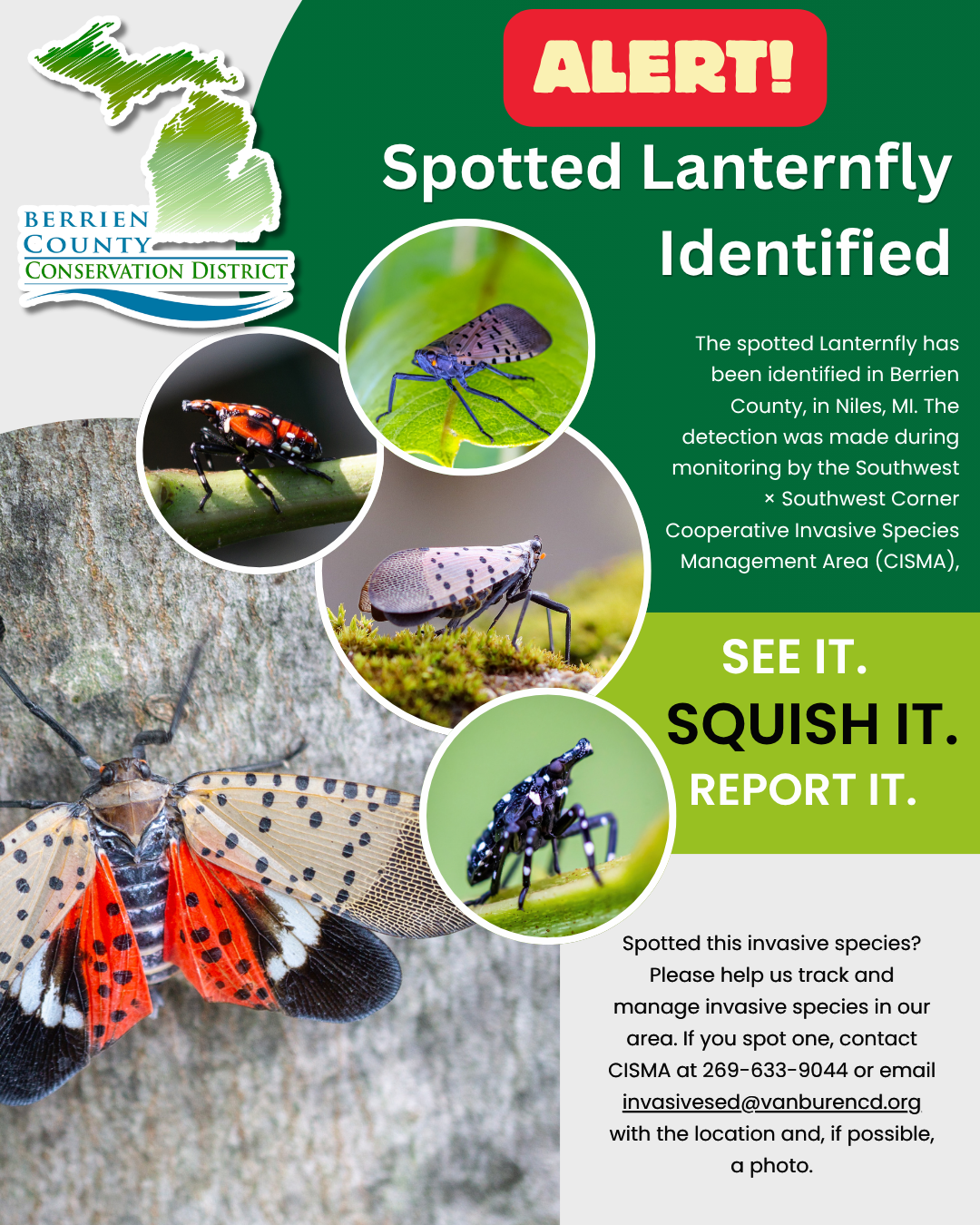
Berrien County has a new invasive species to watch for. The Michigan Department of Agriculture and Rural Development (MDARD), in partnership with the U.S. Department of Agriculture (USDA), has confirmed a population of spotted lanternfly (Lycorma delicatula) in Berrien County. The detection was identified through monitoring conducted by the Southwest x Southwest Corner Cooperative Invasive Species Management Area (CISMA).
The recent detection was found in the Niles area, making awareness and early detection especially important for residents, landowners, farmers, and growers throughout Berrien County.
What is Spotted Lanternfly?
Spotted lanternfly is an invasive insect native to parts of Asia. It was first detected in Michigan in 2022 and has since been confirmed in several Michigan counties. As of September 2026, confirmed populations include Berrien, Jackson, Lenawee, Macomb, Monroe, Oakland, Washtenaw, and Wayne counties.
While spotted lanternfly generally does not kill plants, large populations can stress plants and cause localized damage. This is particularly important in Berrien County because of our agricultural landscape and our role as one of Michigan's major grape-producing regions.
Spotted lanternfly feeds on more than 70 plant species. Some of its preferred hosts include tree-of-heaven, grapevines, and hops, along with a variety of trees and other plants. Heavy feeding can weaken plants, while the insect's sticky honeydew can encourage the growth of black sooty mold.
What Does It Look Like?
Spotted lanternfly goes through several life stages.
Young nymphs: Black with white spots, later developing red coloration with black spots.
Adults: About 1 inch long and ½ inch wide, with spotted wings when closed and striking red-and-black wings when open.
Egg masses: Grayish and mud-like when newly laid, and they can be found on trees, vehicles, outdoor equipment, firewood, and other hard surfaces.
Because spotted lanternfly can hitchhike on vehicles, trailers, outdoor furniture, firewood, and other items, checking equipment before moving it can help slow its spread.
What Should You Do If You See One?
Because Berrien County now has a confirmed population, MDARD recommends residents squish spotted lanternflies when they see them.
If you spot a suspected spotted lanternfly, take a clear photograph, record the date, time, and location, and report it through Michigan's Eyes in the Field reporting system or by emailing CISMA at invasivesed@vanburencd.org.
Most importantly, don't panic. Spotted lanternfly does not pose a threat to people or animals. The goal is to monitor populations, slow their spread, and reduce potential impacts on Michigan's natural resources and agricultural crops.
Help Us Keep an Eye Out
With spotted lanternfly now confirmed in Berrien County, everyone can play a role in monitoring this invasive species. Take a few moments to learn what it looks like, check vehicles and outdoor equipment for hitchhiking insects or egg masses, and keep an eye on your trees, gardens, and crops.
Early detection and continued monitoring are important tools in managing invasive species and protecting the natural resources and agricultural lands that make Berrien County special.
See it. Squish it. Help stop the spread.
For more information about identifying and managing spotted lanternfly, visit the Michigan Invasive Species Program's spotted lanternfly resources.