
Keep Your Eyes Peeled for the Invasive Plant -Kudzu
For Immediate Release
Contact: Van Buren Conservation District
Jena Johnson
1035 E Michigan Ave
Paw Paw, MI 49079
P 269-366-7287
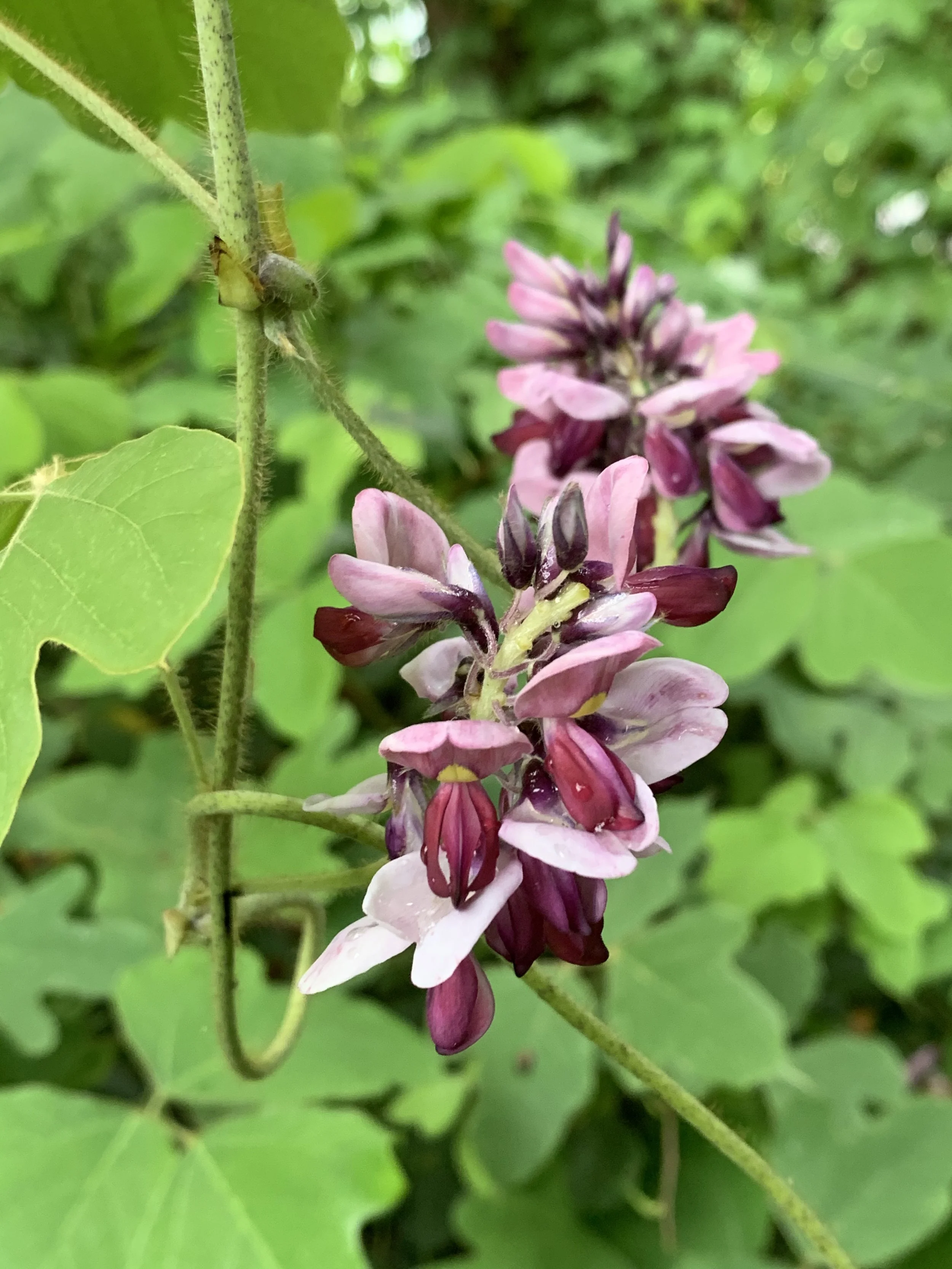
This year, the CISMA Team of the Van Buren Conservation District are continuing our efforts against invasive Kudzu. Kudzu is known as the “vine that ate the South”, and its woody vines can grow up to one foot per day. The CISMA Team will continue survey and treatment efforts at the four known kudzu locations in Southwest Michigan.
Two of these locations are very close to being considered officially eradicated. The other two locations have been improving every year since management began in 2021. The Team will also search for kudzu populations that may have not been discovered yet. If new locations are found, we will begin treatment at those locations, pending landowner permission.
Kudzu’s vines and large, fuzzy, compound leaves can shade out other plants. It can outcompete native species, sometimes killing trees and causing them to fall. Kudzu grows from root crowns that you can see at soil level. One root crown can sprout up to 30 vines. If unchecked, these vines can take root and develop more root crowns.
Kudzu also has showy flowers that bloom in August-September and can be white, purple, or even deep red. The CISMA Team would appreciate you keeping an eye out for this invasive vine! Please note, poison ivy is often mistaken for kudzu. This is because both plants have woody vines and similar shaped leaves. However, kudzu has uniquely fuzzy leaves and young vines. Also, the lobes of kudzu leaflets are generally more rounded than poison ivy’s. You can easily make reports using an app called INaturalist. Make a free account, and then you can make reports in minutes with a smartphone! You can also contact the CISMA Team with any questions you have. If you think you have found kudzu, email pictures and location information to StrikeTeam@VanBurenCD.org, or call or text 269-366-7287.
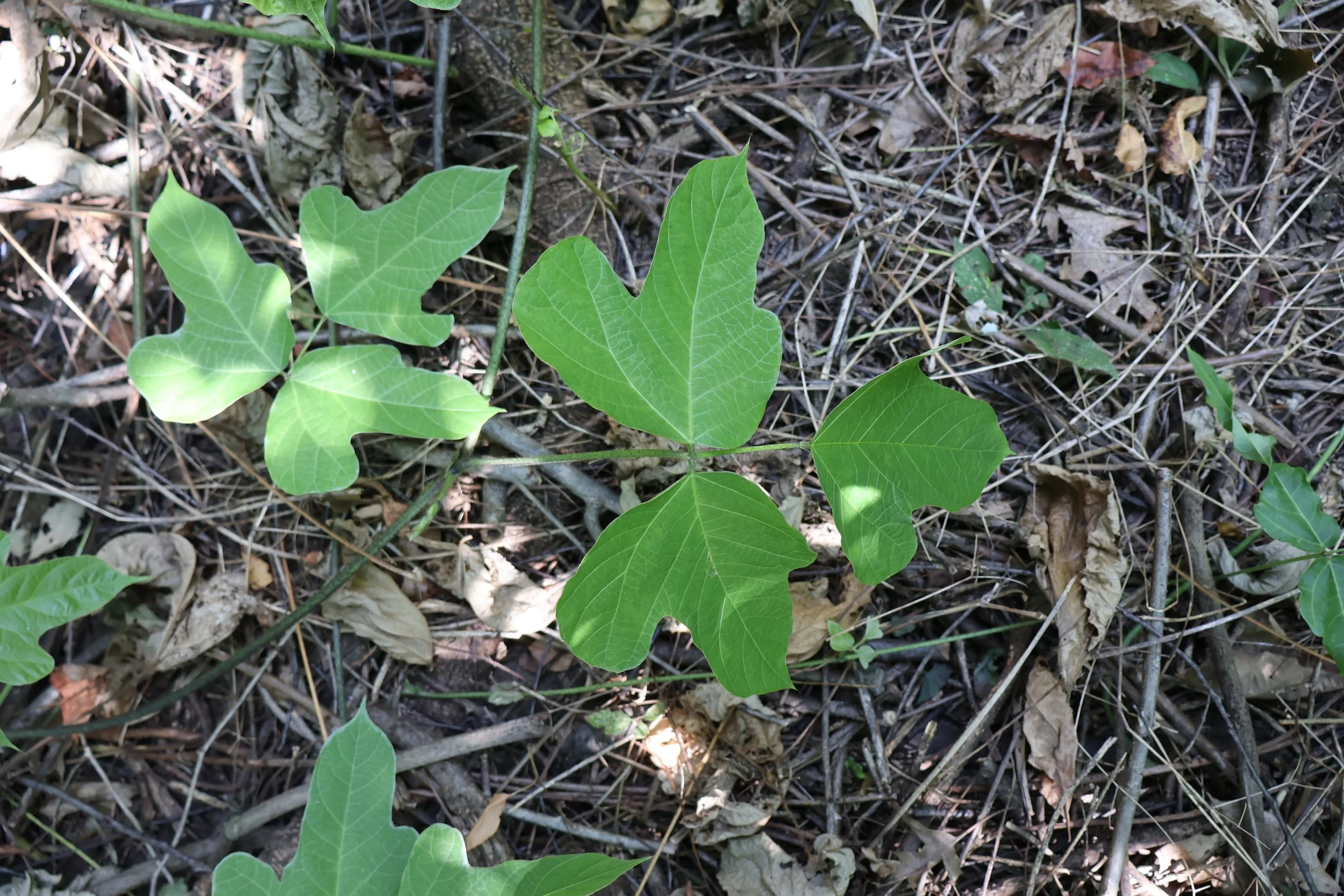
To treat kudzu, the CISMA Team will use backpack sprayers to apply herbicides on the leaves of this plant. We may also cut woody vines and treat the stumps with herbicide. These herbicides will have the active ingredients glyphosate or triclopyr. Anyone treating kudzu with herbicides will be MDARD Certified Pesticide Applicators. Applicators will use techniques to reduce herbicide exposure on off-target plants and in water bodies.
Thank you for helping your local Conservation District protect our shared
resources from invasive species!